Staying out of an emergency room
Supplements, Diets and Energy Drinks: What an ER Sees
Published September 14, 2026 · 5 min read
We are not the right place to get diet advice, and this is not an article
about what to eat. Your own clinician or a dietitian is the right source, and
almost everything worth saying about nutrition is said better elsewhere.
What we can tell you is the narrow, specific thing an emergency room knows:
which food, drink and supplement habits actually turn up here. There are four,
and the first one is the important one.
Four habits that turn up here
The narrow thing an emergency room knows about food, drink and supplements.
Diet advice belongs elsewhere
Your own clinician or a dietitian is the right source for that.
If you are unsure, come in
This list is not exhaustive and you are not expected to diagnose yourself.
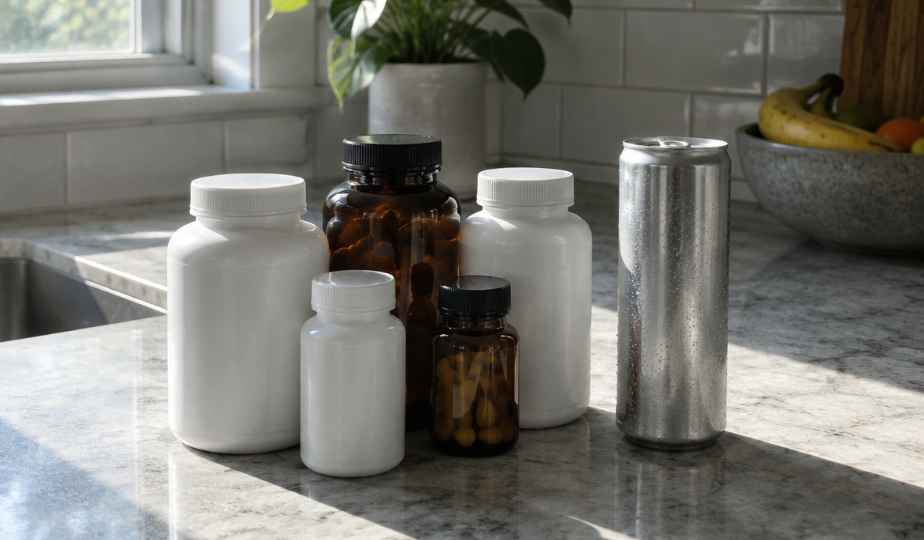
1. Supplements are not inert, and we need to know what you take
The single most useful thing on this page: tell us everything you take,
including supplements, herbal products, protein powders and anything bought
without a prescription.
People routinely leave those off, because "supplement" does not feel like
"medication." It matters clinically:
- Several common supplements affect bleeding, which matters enormously if
you are on a blood thinner, have had a head injury, or need a procedure. A
head strike plus a blood thinner plus a supplement that also thins the blood
is a genuinely worse situation than any one of those alone. - Some affect the heart's rhythm, or blood pressure.
- Some interact with prescription medication, raising or lowering how much
of it is actually in you. - Some affect blood sugar, which matters in diabetes.
"Natural" is not a safety claim. It describes where something came from, not
what it does. And supplements are not regulated the way prescription
medication is — what is on the label is not independently verified the same
way, and strength varies between products and batches.
None of that means they are all dangerous. It means they are pharmacologically
active, and we cannot account for something we do not know about. Photograph
the labels of everything you take and keep it on your phone. It is the same
thirty-second job as the tetanus record, and it answers a question that
otherwise costs guesswork.
2. More water is not always better
Counter-intuitive, and it matters here specifically.
Drinking large volumes of plain water during long exertion — a long hike, a
long ride — can dilute the salt in your blood dangerously. It is uncommon and
it is serious, and the early signs look like heat illness: headache, nausea,
confusion.
What to do instead: for long or hot activity, replace salt as well as water,
and do not force volume beyond thirst over many hours. For ordinary days,
thirst is a decent guide — this caution is about endurance, not about drinking
a glass of water.
And the far more common problem here is still the opposite. In this climate
most people are underdoing it, not overdoing it.
Dehydration in Arizona ·
Heat illness
3. Energy drinks, and stacking them
Palpitations, chest tightness and anxiety after several energy drinks is a
presentation we see, and it is commonest in young people who would otherwise
never come to an emergency room.
The pattern is stacking: an energy drink, a pre-workout supplement, a coffee
and a decongestant contain overlapping stimulants, and nobody counts them
together. Add heat and dehydration and the same amount hits harder than it
did in January.
Come in for chest pain, fainting, or a racing heart that will not settle.
Holiday heart ·
Chest pain
4. Extreme diets, fasting and the way they arrive here
Rapid or extreme changes produce the visits, not ordinary imperfect eating.
What we see: fainting and dizziness from very low intake, especially in the
heat; electrolyte problems from prolonged fasting or purging; missed medication
because a diet changed mealtimes; and low blood sugar in people on diabetes
medication who changed how they eat without changing anything else.
If you take medication for diabetes or blood pressure and you are changing how
you eat, that is a conversation with your clinician first. The medication was
set for the old pattern.
What actually helps, said briefly and then dropped
Because an article that only warns is not useful:
Eat mostly food you recognise. Enough vegetables that you notice. Drink water
in this climate before you are thirsty. Sleep.
That is the whole of what we are qualified to say, and the rest belongs to
your own clinician. Anyone telling you there is one more thing you must buy is
selling it.
What happens when you arrive here
- A physician sees you — board-certified, every visit, at every hour.
- Laboratory work on site, which for electrolyte and blood-sugar problems is
the assessment rather than a supplement to it. - A heart check where symptoms warrant it.
- Monitoring for up to 24 hours where levels need correcting gradually and
rechecking rather than fixing in one step.
If admission or hospital-level inpatient care is needed, we stabilise and
arrange the transfer. We are an emergency room, not a hospital.
Bring, or photograph, everything you take. Prescriptions, supplements,
powders, teas. Nobody will judge the list — we just cannot work around what we
do not know about.
El Mirage ER — open 24 hours a day, 7 days a week, 365 days a year.
12000 N El Mirage Rd, El Mirage, AZ 85335 · (480) 237-4922
Walk in. No appointment, no referral.
If this is a medical emergency, call 911.
This article explains when to seek emergency care. It is not medical, dietary
or nutritional advice and cannot account for your history or medications. If you
are unsure, call us or call 911.
Sources
The guidance in this article about when to seek emergency care is drawn
from these public sources. Each one is linked so you can read it yourself.
- MedlinePlus (National Library of Medicine) — Nutrition — https://medlineplus.gov/nutrition.html
This article is general information, not a diagnosis, and it cannot account
for your history or medications. If you are unsure, call us on (480) 237-4922
or come in. If it might be an emergency, treat it as one and call 911.