By symptom
Poisoning: What to Do First, and Who to Call
Published September 1, 2026 · 5 min read
Call 911 if the person is unconscious, having a seizure, struggling to
breathe, or you cannot wake them.
For everything else, call Poison Control first: 1-800-222-1222. Free, 24
hours, staffed by specialists, and they will tell you whether this needs an
emergency room at all. Most exposures do not.
Three exceptions. For these, come in now or call 911 — do not phone first: a
swallowed button battery, a swallowed magnet, or carbon monoxide.
Each is explained below.
Call 911
Unconscious, having a seizure, struggling to breathe, or you cannot wake them.
Otherwise call Poison Control first
1-800-222-1222. Free, 24 hours, and they will tell you whether this needs an ER.
If you are unsure, come in
This list is not exhaustive and you are not expected to diagnose yourself.
Why we are telling you to call someone else
An emergency room saying "ring a helpline before you drive here" is unusual, so
the reasoning is worth stating.
Poison Control can identify the substance, the dose that matters, and the
actual risk far faster than a waiting room can — and for the large majority of
exposures the answer is that no treatment is needed and you can stay at home
with something to watch for. Sitting in an ER for four hours to be told that
is a worse outcome than a five-minute phone call.
When it does need care, they will say so, and they can tell us what to expect
before you arrive. Either way you are better off having called them first.
Keep the container, the packet, or a photo of the label. It is the single
most useful thing you can bring, and it changes the advice more than any symptom
does.
The three that do not wait
A swallowed button battery
This is an emergency within hours, and almost nobody knows it.
A coin-shaped lithium battery lodged in the throat or oesophagus generates a
current that burns through tissue. Serious injury can occur in two hours,
and the child may look completely well.
They are in remote controls, key fobs, greetings cards, hearing aids, bathroom
scales, toys, and light-up shoes.
Come in immediately, or call 911. Do not wait for symptoms, do not try to
make them sick, and do not give food or drink. If you think a button battery
may have been swallowed, act as though it was.
Swallowed magnets
Two or more magnets, or one magnet and anything metal, can attract through
the wall of the bowel and cut off its blood supply. Same urgency, same
reasoning, same instruction: come in.
Carbon monoxide
Headache, nausea, dizziness and confusion affecting several people — or pets
— in the same building, better when they go outside. No smell, no warning.
Get everyone out into fresh air and call 911. Do not go back inside to open
windows.
What to do, in order
- Get them away from the substance. For fumes, into fresh air. For a
chemical on skin, remove contaminated clothing and rinse with lots of running
water. - For eyes: rinse with lukewarm water for fifteen to twenty minutes, and
keep rinsing on the way to help. - Call Poison Control — 1-800-222-1222 — or 911 if they are seriously
unwell. - Have the container in your hand when you call.
What not to do, and this is the part that has changed
- Do not make them vomit. Not with salt water, not with a finger, and not
with syrup of ipecac — which is no longer recommended and should not be in
your cupboard. Vomiting can cause more damage on the way back up,
particularly with anything corrosive. - Do not give milk, water, or anything else to drink unless you are told
to. It sounds helpful and it can make things worse. - Do not use activated charcoal on your own initiative.
- Do not wait to see if symptoms develop with the three above, or with any
medication overdose.
Where poisonings actually come from
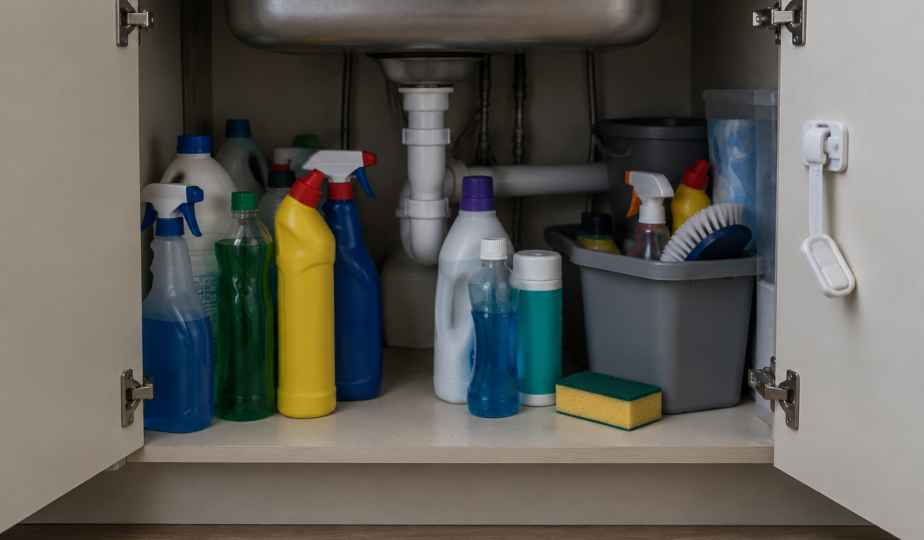
Prevention advice is usually a list of cupboard locks. The real pattern is
more specific than that:
For young children, medication is the commonest source — and frequently not
their own household's. A visiting relative's handbag or a weekly pill
organiser on a low table is the classic scenario, because pill organisers are
designed to open easily and are not child-resistant. It is worth a direct
conversation before grandparents visit or you visit them.
Also: laundry and dishwasher pods, which look like sweets and burst under
pressure · vape refills and nicotine pouches · cannabis edibles, which are
packaged as food and dosed for adults · e-cigarette liquid · hand sanitiser.
For older adults the pattern is different and less often discussed:
medication error rather than exploration — a double dose, two products
containing the same ingredient, a new prescription interacting with an old one,
or a change in kidney function making a long-standing dose too strong.
Confusion in an older person on several medications is worth a phone call,
not a wait.
In this valley, also: pool chemicals, which should never be stored together
or decanted into a drinks bottle · pesticides and rodent bait · and anything
left in a hot garage, since heat can make containers leak or burst.
What happens when you arrive here
- A physician sees you — board-certified, every visit, at every hour.
- Laboratory work on site, which for some substances is how the decision
gets made. - Imaging on site — and for a suspected button battery or magnet, an X-ray
is how its position is found, which is the whole reason to come in rather
than wait. - A critical care room here for the presentations that need one.
- Monitoring for up to 24 hours, which matters here because some substances
cause little at first and much more several hours later.
If admission, an antidote we do not stock, or specialist care is needed, we
stabilise and arrange the transfer. We are an emergency room, not a hospital.
Bring the container. If you have already called Poison Control, say so and
tell us what they advised — it saves repeating the work.
El Mirage ER — open 24 hours a day, 7 days a week, 365 days a year.
12000 N El Mirage Rd, El Mirage, AZ 85335 · (480) 237-4922
Poison Control: 1-800-222-1222 · If this is a medical emergency, call
911.
This article explains when and how to seek help. It is not medical advice and
cannot account for the substance, the amount, or the person involved. If you are
unsure, call Poison Control or 911.
Sources
The guidance in this article about when to seek emergency care is drawn
from these public sources. Each one is linked so you can read it yourself.
- Poison Control (National Capital Poison Center) — Poison Help, 1-800-222-1222 — https://www.poison.org/
- Arizona Poison and Drug Information Center, University of Arizona — https://azpoison.com/
This article is general information, not a diagnosis, and it cannot account
for your history or medications. If you are unsure, call us on (480) 237-4922
or come in. If it might be an emergency, treat it as one and call 911.