
By symptom
Burns: How Bad Is It, and What to Do First
Published August 27, 2026 · 5 min read
Call 911 for a burn to the face or neck, any burn with soot around the mouth
or nose, a hoarse voice or a cough after a fire, an electrical burn, a burn that
goes right around a limb or the chest, or a burn larger than the person's own
palm-and-fingers several times over.
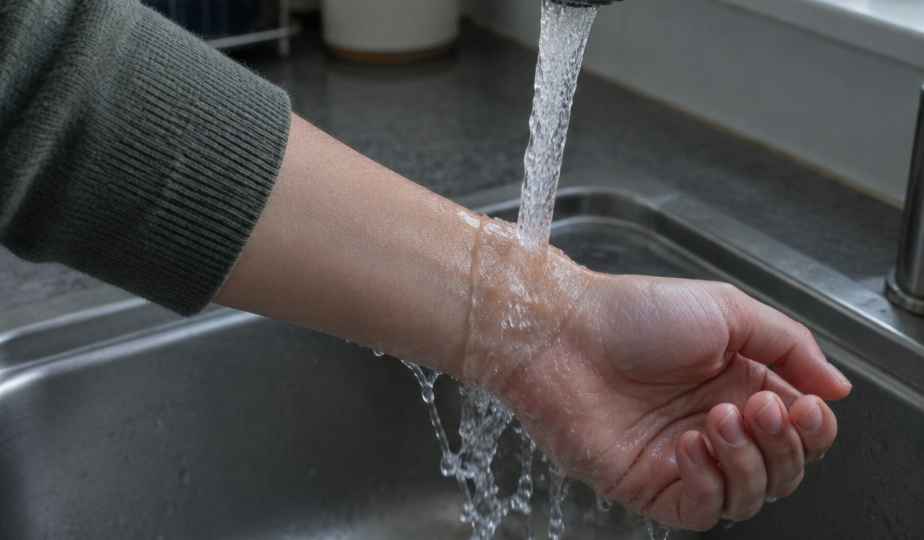
Cool the burn under cool running water for about twenty minutes, as soon as
you can. This is the one thing that changes how a burn heals, it still helps
up to about three hours afterwards, and most people stop far too early.
Do not use ice, and do not put anything else on it — no butter, no
toothpaste, no ointment, no home remedy.
Call 911
Burns to the face or neck, soot around the mouth, a hoarse voice after a fire, or an electrical burn.
Cool it for twenty minutes
Under cool running water, as soon as you can. This changes how a burn heals.
If you are unsure, come in
This list is not exhaustive and you are not expected to diagnose yourself.
The counter-intuitive part: a painless burn is the worse one
Burns are described by how deep they go, and depth does not track pain the way
people expect.
| Depth | Looks like | Feels like |
|---|---|---|
| Superficial | Red, dry, no blisters. Like bad sunburn | Very painful |
| Partial thickness | Blisters, wet or weeping, blotchy red or pale | Extremely painful |
| Full thickness | White, waxy, leathery, brown or charred. Dry | Little or no pain |
The deepest burns hurt least, because the nerve endings that would report the
pain have been destroyed. So "it doesn't really hurt" is not reassuring — on a
burn that looks white, leathery or charred it is the finding that matters most.
Be seen for any burn you think might be full thickness, whatever its size and
whatever it feels like.
Come in for any of these
- Burns to the face, hands, feet, genitals, or over a joint. Not because
they are always deep, but because scarring in those places costs function. - Any burn that goes all the way around a finger, limb, or the chest
- Blisters larger than a small coin, or blistering over a wide area
- Any electrical burn, including a shock that left barely a mark — the
surface injury is a poor guide to what happened underneath - Chemical burns, after flushing with lots of water
- A burn in a very young child or an older adult, at a lower threshold than
you would use for yourself - Anyone who was in an enclosed space with smoke, even without a visible
burn - A burn that looks infected later — spreading redness, increasing pain
after day two, pus, fever - Any burn where you are not sure. Burns declare their real depth over a day
or two, and an early look is more useful than a late one.
The Arizona burn nobody expects
Pavement in a Phoenix summer reaches temperatures that cause a full-thickness
burn in seconds. So do playground equipment, metal slides, car seats,
seatbelt buckles, steering wheels and the concrete around a pool.
Contact burns are one of the more common summer injuries in this valley, and
they arrive in ways that sound innocuous:
- Barefoot on pavement, a driveway or pool decking — including walking a
few steps to a car - A fall onto hot ground. This is the one that produces serious burns in
older adults and in anyone who could not get up quickly, because contact time
is what determines depth. - Dogs and children, who cannot tell you the ground is too hot until they
are already on it - A hot seatbelt buckle or a metal car-door handle on bare skin
- Sun-heated bath or hose water left standing in a line outdoors
If someone falls on hot pavement in summer, treat it as a burn as well as a
fall — and cool it while you are working out whether anything else is wrong.
What to do, in order
- Stop the burning. Move away from the source. Turn off electricity at the
supply before touching anyone with an electrical burn. - Cool it under cool running water for about twenty minutes. Not ice, not
iced water — those can deepen the injury and drop body temperature,
especially in a child. - Take off rings, watches and tight clothing near the burn before it
swells. Leave anything stuck to the burn alone. - Cover it loosely — cling film laid over the area, not wrapped tightly
around it, or a clean non-fluffy cloth. It reduces pain and keeps it clean. - Keep the person warm otherwise, especially a child, since twenty minutes
of cooling can chill them. - Do not burst blisters.
Chemical burns: flush with plenty of running water for considerably longer,
and bring the container or a photo of the label if you safely can.
What happens when you arrive here
- A physician sees you — board-certified, every visit, at every hour.
- The burn assessed for depth and area, which is what determines everything
that follows and is difficult to judge in the first hours. - Pain treated, which for a partial-thickness burn is a large part of the
visit. - Cleaning and dressing, and advice on what it will look like over the next
few days so you know what is normal. - Imaging and laboratory work on site if there was a fall, an electrical
injury, or smoke involved. - A critical care room here for the presentations that need one.
- Monitoring for up to 24 hours, which matters for burns because fluid
shifts and swelling develop over hours rather than immediately.
If a burn needs a specialist burn service or admission, we stabilise you and
arrange the transfer. We are a freestanding emergency room, not a hospital.
Serious burns are managed at specialist centres, and recognising that early
is part of the job rather than a shortcoming — a large or deep burn is better
served by going to the right place quickly than by being treated nearer home.
El Mirage ER — open 24 hours a day, 7 days a week, 365 days a year.
12000 N El Mirage Rd, El Mirage, AZ 85335 · (480) 237-4922
Walk in. No appointment, no referral.
If this is a medical emergency, call 911.
This article explains when to seek emergency care. It is not medical advice and
cannot account for your history, your medications, or what is happening to you
now. If you are unsure, call us or call 911.
Sources
The guidance in this article about when to seek emergency care is drawn
from these public sources. Each one is linked so you can read it yourself.
- MedlinePlus (National Library of Medicine) — Wounds and Injuries — https://medlineplus.gov/woundsandinjuries.html
- MedlinePlus (National Library of Medicine) — First Aid — https://medlineplus.gov/firstaid.html
This article is general information, not a diagnosis, and it cannot account
for your history or medications. If you are unsure, call us on (480) 237-4922
or come in. If it might be an emergency, treat it as one and call 911.